Floor-to-ceiling
windows
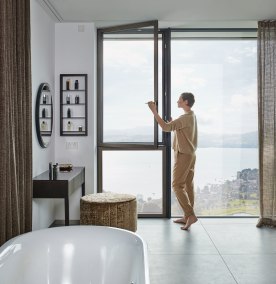
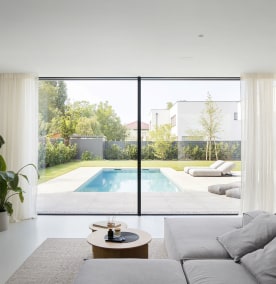
Floor-to-ceiling windows are basically all glass elements that extend to the floor.


Nowadays, there are many things to consider when building or renovating a house. These rules are usually laid down in building regulations or construction regulations. Unless openable, floor-to-ceiling elements are the threshold to a balcony or terrace, fall protection is mandatory.
This fall protection can be guaranteed by a French balcony. Both an aesthetic glass balustrade and a discreet lattice balcony blend architecturally into the appearance of the house and skilfully set accents. They have no effect on light supply or living comfort.
There are no regulations for French balconies with elements that cannot be opened or can only be opened partially. Fall protection is always necessary if there is a risk of falling on the opposite side.
Fixed parts must also be designed to be fall-proof, but in this case the glass is designed to be fall-proof and no external fall protection is used.
Floor-to-ceiling windows are basically all glass elements that extend to the floor. Different things need to be considered for different types of floor-to-ceiling windows. Everything you need to know is explained in the following article.
Floor-to-ceiling windows include:
Read on to find out more about the different floor-to-ceiling elements and which ones require fall protection.
The following types of floor-to-ceiling windows are available:
Lift-and-slide doors are an attractive way to access the patio or balcony. Their size makes them excellent sources of light. The maximum size here is an impressive 3.20 x 6 metres.
The same recommendations apply to sliding doors as to lift-and-slide doors. Since lift-and-slide doors and sliding doors on the upper floor are usually combined with a balcony, no additional fall protection needs to be installed. The maximum height for sliding doors is also 3.20 metres.
A beautiful example of floor-to-ceiling windows is the patio door, also known as a balcony door. Patio doors with glazing bars in particular lend your home a special Nordic charm. If you are planning to install patio doors on the upper floor without them leading to a balcony, you must also consider installing fall protection. This fall protection can either be a glass balustrade in front of the patio door or a discreet grille. The maximum height for patio doors is 300 centimetres

Nowadays, there are many things to consider when building or renovating a house. These rules are usually laid down in building regulations or construction regulations. Unless openable, floor-to-ceiling elements are the threshold to a balcony or terrace, fall protection is mandatory.
This fall protection can be guaranteed by a French balcony. Both an aesthetic glass balustrade and a discreet lattice balcony blend in architecturally with the appearance of the house and skilfully set accents.
There is no regulation for French balconies with elements that cannot be opened or can only be partially opened. Fall protection is already ensured by the use of safety glass, such as laminated safety glass (LSG). This prevents cuts or falls and is already installed in the window glass.
Improved quality of living: Light-flooded rooms are the main reason for floor-to-ceiling windows. This goes hand in hand with a significant improvement in quality of life and mood. Are you also aware of the advantages of wood in terms of your quality of living?
Energy gains: The large glazed areas allow the sun to heat the rooms during the cold season. This significantly reduces the heating load in winter. Good sun protection provides the necessary privacy and sun protection. With external blinds, roller blinds or shutters, you decide how much light and privacy you want. In this article, find out how much heating requirements can be reduced with solar heat gain through windows .
More air supply: A large glass surface also offers advantages when it comes to ventilation, provided that it can be opened. This is because the large opening created when ventilating allows much more fresh air into your home compared to normal windows. Generous air exchange and plenty of sunlight also ensure a healthy indoor climate.
Speaking of ventilation: do you actually know how to ventilate properly? No? Here's how to ventilate correctly and save money at the same time.
Appearance: Floor-to-ceiling windows embody the avant-garde and modern look of any beautiful home. Being in harmony with nature thanks to floor-to-ceiling windows – who wouldn't want that? Floor-to-ceiling windows with glazing bars give classic houses a particularly Nordic touch. Glazing bar windows in a dark wood tone in particular emphasise the industrial style. Whether you're looking for avant-garde architectural highlights, a lovingly furnished two-family house or a colourful villa – you'll find inspiration for your dream home in our individual reference gallery.
Investing in high-quality burglary protection pays off. The longer it takes a burglar to open a window, the higher the risk of discovery. Mushroom pin locks are considered good protection.
It is so named because mushroom-shaped pins are installed as window fittings. With mushroom pin locks, floor-to-ceiling or normal windows cannot be levered open later. Mushroom pin locks are installed as standard on all turn-and-tilt elements from Josko's modern and classic design lines.

![[Translate to Englisch:] Schiebetür mit Fixelement von Josko](https://res.cloudinary.com/josko/image/fetch/s---tOoMvOc--/c_crop,w_5430,h_5595,x_858,y_2/c_fit,w_276/f_auto/https://www.josko.com/fileadmin/user_upload/LP/Fenstervarianten/210723-77_maurach_wohnhaus-laerchenwiese_schreyerdavid.jpg)

![[Translate to Englisch:] Nullschwelle Josko Schiebetuer Barrierefreiheit](https://res.cloudinary.com/josko/image/fetch/s--LOgrHPJv--/c_crop,w_2221,h_1249,x_228,y_595/c_fit,w_276/f_auto/https://www.josko.com/fileadmin/user_upload/LP/Terrassenoeffnungsart/Nullschwelle-ONE-Josko-Schiebetuer-schwellenlos-ohne-Schwelle-barrierefrei-Barrierefreiheit-kein-Stolpern-nahtloser-Uebergang.jpg)
![[Translate to Englisch:] barrierefreie Schwelle Josko Hebeschiebetuer](https://res.cloudinary.com/josko/image/fetch/s--C2GctVw7--/c_crop,w_2681,h_1508,x_2354,y_4784/c_fit,w_276/f_auto/https://www.josko.com/uploads/Fenster/Vorteile/nahezu-barrierefreie-Schwelle-Josko-Hebeschiebetuer-Barrierefreiheit.jpg)
